Blog
Stuart Russell Testifies on AI Regulation at U.S. Senate Hearing
11 Sep 2023
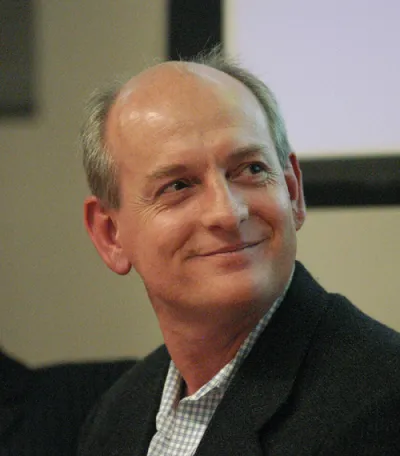
On July 25, Stuart Russell gave a testimony on AI benefits, risks, and regulations at the U.S. Senate hearing titled “Oversight of A.I.: Principles for Regulation.”
AI Regulation – Stuart Russell’s Opening Statement at U.S. Senate Hearing
11 Sep 2023
“The problem of control: how do we maintain power, forever, over entities that will eventually become more powerful than us?”
In July 2023, Senate Committee on the Judiciary’s Subcommittee on Privacy, Technology, and the Law hosted the U.S. Senate hearing titled “Oversight of A.I.: Principles for Regulation.” Stuart Russell testified on benefits and risks of artificial general intelligence and offered suggestions on how to regulate these kinds of technologies.
Even Superhuman Go AIs Have Surprising Failures Modes
28 Jul 2023
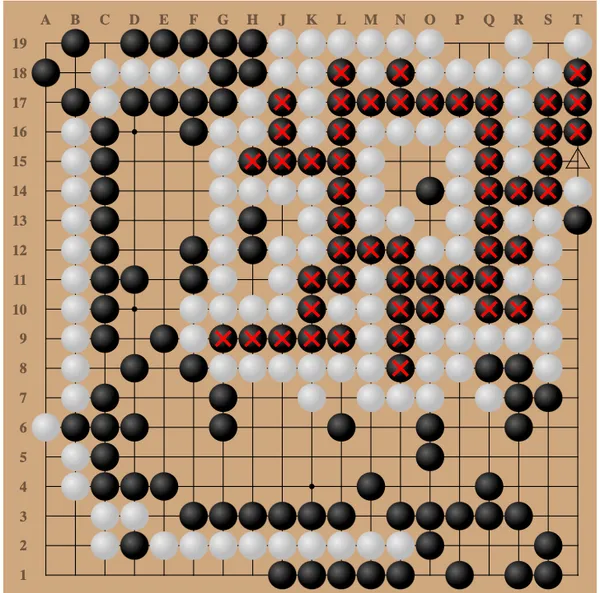
In March 2016, AlphaGo defeated the Go world champion Lee Sedol, winning four games to one. Machines had finally become superhuman at Go. Since then, Go-playing AI has only grown stronger. The supremacy of AI over humans seemed assured, with Lee Sedol commenting they are an “entity that cannot be defeated”. But in 2022, amateur Go player Kellin Pelrine defeated KataGo, a Go program that is even stronger than AlphaGo. How?

For Learning in Symmetric Teams, Local Optima are Global Nash Equilibria
05 Oct 2022
When AI systems are deployed in the real world, many cooperating AI agents will share the same source code or neural network weights. This motivates the study of symmetric team theory. In this talk, Scott shares the results of a new CHAI research paper: For Learning in Symmetric Teams, Local Optima are Global Nash Equilibria. There’s a mix of good and bad news, showing conditions when symmetric cooperation is both stable and unstable.
Designing Societally Beneficial Reinforcement Learning Systems
10 Aug 2022
Many are concerned about the future long-term implications of reinforcement learning (RL) systems that can learn dynamically from interaction with human environments. However, RL systems are already being used today and proposed in a variety of near-term applications. For example, Deep RL is transitioning from a research field focused on game playing to a technology with real-world applications. Notable examples include DeepMind’s work on controlling a nuclear reactor or on improving Youtube video compression, or Tesla attempting to use a method inspired by MuZero for autonomous vehicle behavior planning. The exciting potential for real world applications of RL are also a harbinger for longer-term risks – for example RL policies are well known to be vulnerable to exploitation, and methods for safe and robust policy development are an active area of research.