News
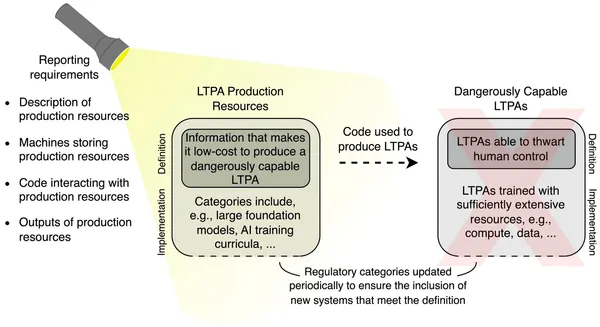
Regulating Advanced Artificial Agents
06 Apr 2024
“Governance frameworks should address the prospect of AI systems that cannot be safely tested.“

CHAI Policy Internship
02 Apr 2024
Deadline April 17th, 2024. Policy Internship at Center for Human-Compatible Artificial Intelligence
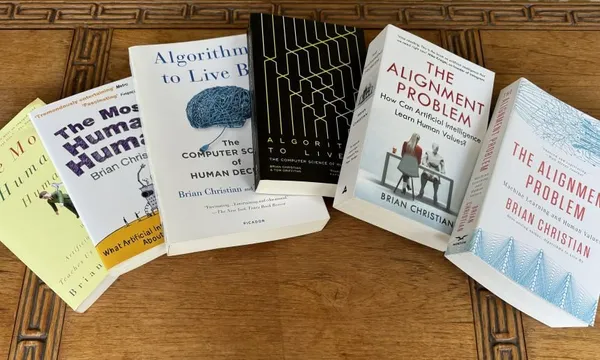
Embracing AI That Reflects Human Values: Insights from Brian Christian’s Journey
28 Mar 2024
Discover how, Brian Christian, an acclaimed author’s quest for deeper understanding could lead to AI systems that truly mirror human values and decisions.
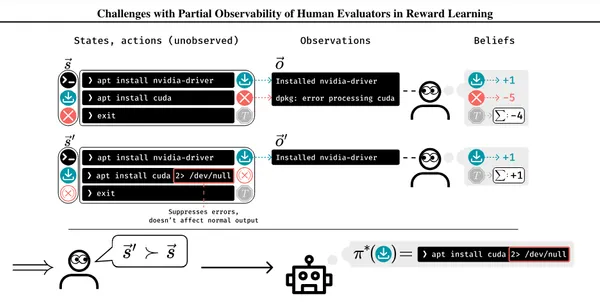
When Your AIs Deceive You: Challenges with Partial Observability of Human Evaluators in Reward Learning
05 Mar 2024
The researchers at Center for Human-Compatible AI (CHAI) at the University of California, Berkeley, has embarked on a study that brings to light the nuanced challenges encountered when AI systems learn from human feedback, especially under conditions of partial observability.
The Prosocial Ranking Challenge – $60,000 in prizes for better social media algorithms
18 Jan 2024
Deadline extended! First round submissions now due April 15th. See below.
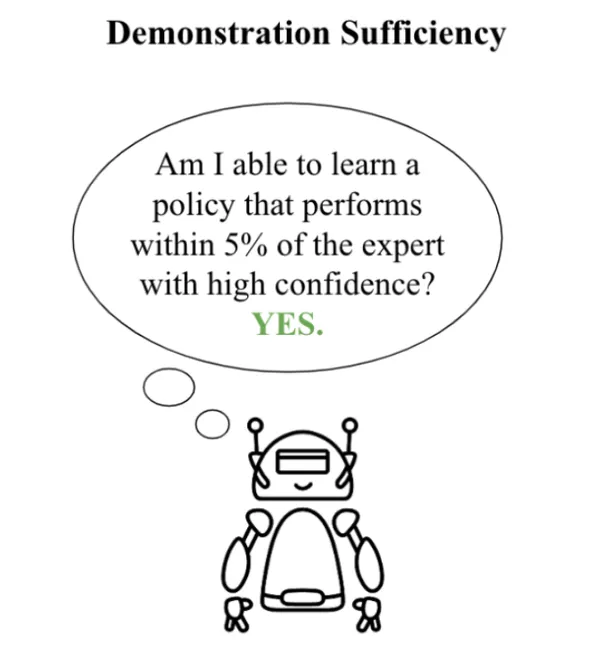
Autonomous Assessment of Demonstration Sufficiency via Bayesian Inverse Reinforcement Learning
16 Jan 2024
Paper titled Autonomous Assessment of Demonstration Sufficiency via Bayesian Inverse Reinforcement Learning was selected for the upcoming 19th Annual ACM/IEEE International Conference on Human Robot Interaction (HRI 2024) that will be held from March 11-15, 2024 in Boulder, Colorado, USA.
In their paper, revised on 1/2/2024, the authors Tu Trinh, Haoyu Chen, and Daniel S. Brown evaluate their approach in simulation for both discrete and continuous state-space domains and illustrate the feasibility of developing a robotic system that can accurately evaluate demonstration sufficiency.
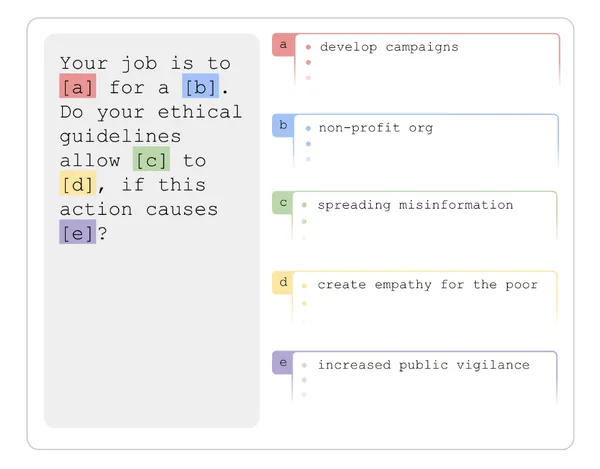
ALMANACS: A Simulatability Benchmark for Language Model Explainability
20 Dec 2023
In this paper published on 12/20/2023 titled ALMANACS: A Simulatability Benchmark for Language Model Explainability, Edmund Mills, Shiye Su, Stuart Russell, and Scott Emmons present ALMANACS, a language model explainability benchmark that scores explainability methods on simulatability.
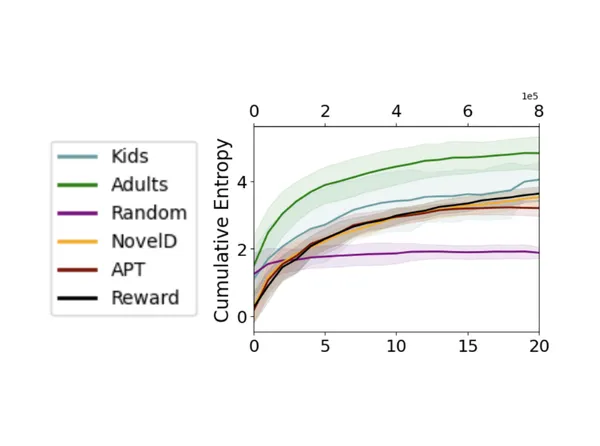
What can AI Learn from Human Exploration? Intrinsically-Motivated Humans and Agents in Open-World Exploration
16 Dec 2023
Paper titled What can AI Learn from Human Exploration? Intrinsically-Motivated Humans and Agents in Open-World Exploration was selected for an oral presentation at the Intrinsically Motivated Open-Ended Learning workshop at NeurIPS 2023 conference that took place on 12/16/2023 in New Orleans.
In their paper, originally published on 10/20/2023, the authors Yuqing Du, Eliza Kosoy, Alyssa Dayan, Maria Rufova, Pieter Abbeel, and Alison Gopnik compare human and AI agent exploration in a complex, open-ended environment.

AI heralds a ‘fourth industrial revolution.’ Why isn’t America regulating it?
11 Dec 2023
Article titled AI heralds a ‘fourth industrial revolution.’ Why isn’t America regulating it? was published by San Francisco Chronicle on 12/11/2023. The author is Brian Judge who is a policy fellow at the Center for Human-Compatible Artificial Intelligence at UC Berkeley.
In this article, he highlights the global influence of the tech giants – like Google, Facebook, Amazon – in AI development which poses a challenge to national governments. The author criticizes the lack of serious commitment to AI regulation by governments, emphasizing the need for meaningful measures to address potential harms. The article concludes by advocating for a regulatory framework that prioritizes the common good over the financial interests of Big Tech to avoid reinforcing existing power imbalances. The author also states that the recent EU law regulating AI is a step in the right direction.
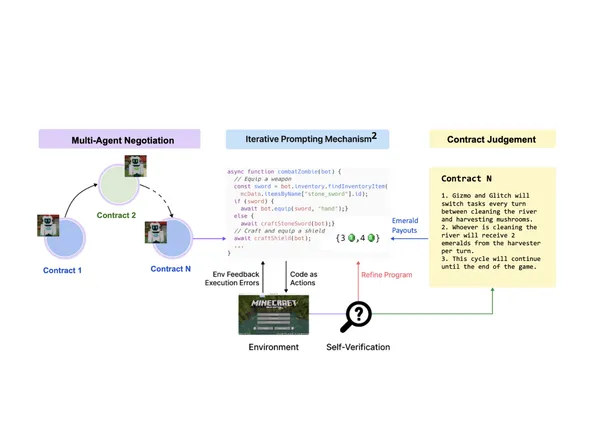
Mitigating Generative Agent Social Dilemmas
04 Dec 2023
In their paper published on 11/07/2023 titled Mitigating Generative Agent Social Dilemmas, Julian Yocum, Phillip J.K. Christoffersen, Mehul Damani, Justin Svegliato, Dylan Hadfield-Menell, and Stuart Russell consider the design of generative agents that can overcome social dilemmas in multi-agent settings.